
3D Golf Swing Analysis
Understand How Your Body Moves.
A golf swing doesn't happen in two dimensions.
Your body shifts, turns, tilts, bends and extends in three dimensions—and those movements influence how the golf club is delivered to the ball.
Using Sportsbox 3D AI, combined with launch-monitor data and nearly 30 years of coaching experience, I can evaluate how your body is moving throughout the golf swing and identify movements that may be helping—or limiting—your performance.
The goal isn't to create a perfect-looking swing.
The goal is to understand your movement and find the most effective way for you to play better golf.
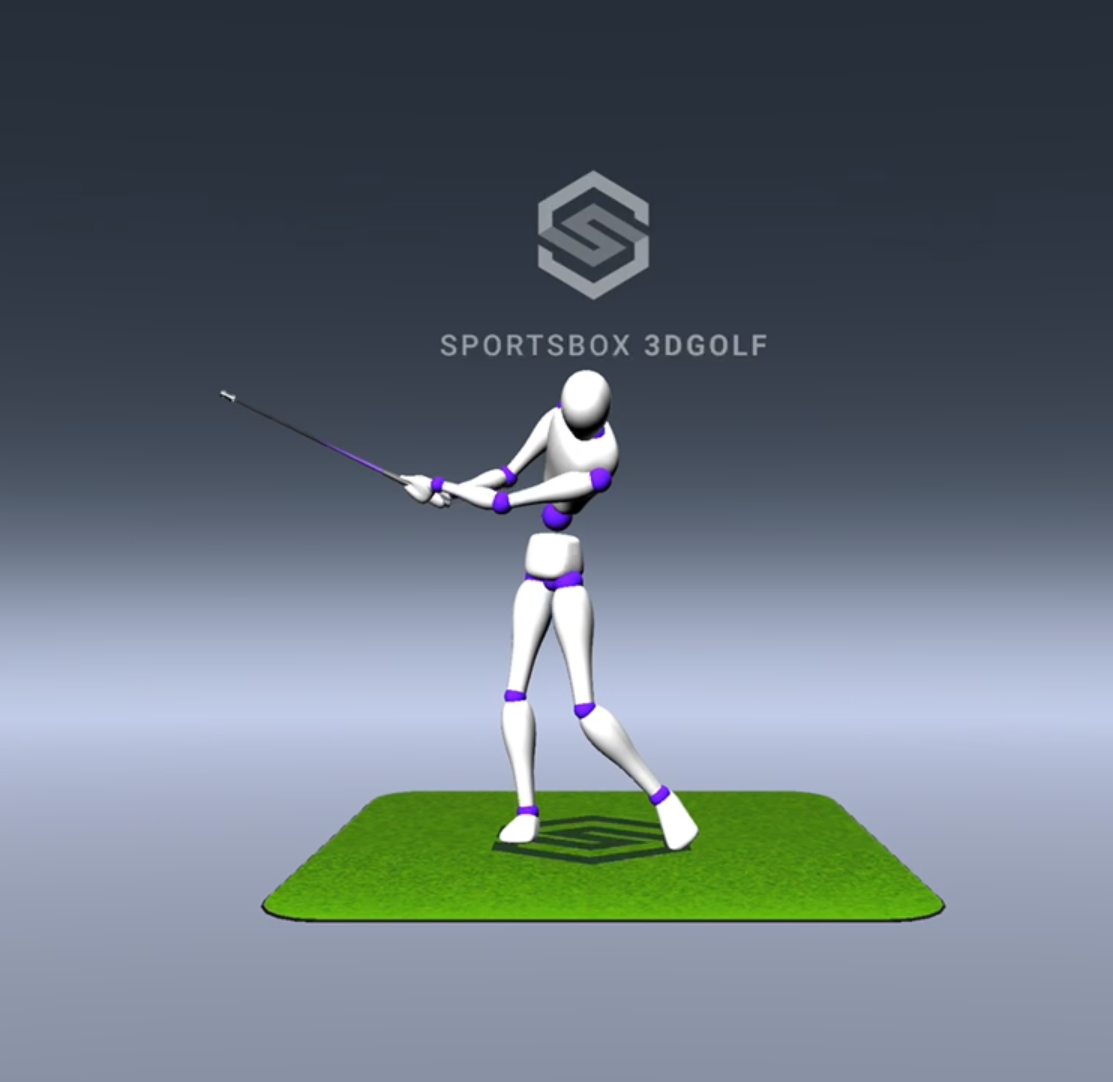
What Is 3D Golf Swing Analysis?
Traditional video is extremely useful, but a camera primarily shows us what a movement looks like.
3D analysis allows us to measure it.
Using Sportsbox 3D AI, we can evaluate important movements of the body throughout the swing, including:
Turn • Tilt • Sway • Lift • Pelvis Movement • Chest Movement • Body Position
Instead of saying:
"It looks like you're swaying too much."
We can measure how far you actually moved.
Instead of:
"You need more turn."
We can see how much you turned and how that movement relates to the rest of your swing.
That gives us a much better starting point for coaching.
Measure → Understand → Improve
1. Measure
We begin by observing your golf swing and establishing what your body and golf club are actually doing.
Depending on the player and the objective, I may combine:
Sportsbox 3D AI — body movement and biomechanics
TrackMan — ball flight and club-delivery data
HackMotion — wrist movement
Video Analysis — visual feedback
We use the information to match feel to reality.
2. Understand
Data by itself doesn't improve your golf swing.
The important question is:
Why is your body moving that way?
A movement may be caused by technique, physical capability, previous instruction, compensation, perception, or simply something the golfer has learned to do over time.
That's why I want to understand the golfer before changing the golf swing.
Your history matters.
Your physical capabilities and limitations matter.
Your goals matter.
And the amount of time you realistically have to practice matters.
3. Improve
Once we understand the movement, we can develop a plan.
That might involve changing a movement pattern, improving sequencing, modifying a setup position, developing a different feel, or sometimes simply helping you better understand something you're already doing well.
The objective isn't to chase numbers.
It's to use the numbers to make coaching more specific, more understandable and more efficient.
Your Swing Is a Chain of Movements
Golf swings are rarely the result of one isolated body part doing something incorrectly.
What appears to be a problem with the arms may actually begin with the pelvis.
A golfer who appears to "come over the top" may be responding to something that happened much earlier in the backswing.
A golfer who hangs back may be compensating for another movement—or may simply be trying to protect a physical limitation.
This is where kinematics or the sequence of movement becomes valuable.
Instead of immediately correcting what we see at impact, we can investigate what caused it.
Sometimes the movement you think is the problem is actually the body's solution to another problem.
There Is No Perfect Golf Swing
3D technology provides valuable measurements and reference ranges, but those numbers should never become the golfer's entire objective.
Golfers have different:
Bodies
Mobility
Strength
Experience
Injury histories
Practice schedules
Goals
Two successful golfers don't necessarily need to move exactly the same way.
I use biomechanics to help determine which movements are important for you and which ones may not need changing at all.
We aren't trying to make your swing match a model.
We're trying to help your movement produce better golf shots.
Technology Should Simplify Golf
Having studied 7 languages, I developed a unique skill to translate complex information into a simplified message.
Modern golf technology can produce an enormous amount of information.
That doesn't mean the golfer needs to hear all of it.
One of the most important responsibilities of a coach is determining:
What information does this player actually need right now and how can they process it best?
You don't need to become an expert in biomechanics.
You need to understand your movement well enough to know what you're working on, why you're working on it, and how to practice it.
Who Can Benefit From a 3D Assessment?
A 3D golf swing assessment can be particularly useful for golfers who:
Have struggled with the same swing pattern despite repeated lessons
Want to understand why a particular ball-flight pattern keeps returning
Feel their body isn't moving efficiently
Want objective measurements rather than relying only on visual interpretation
Are working around physical limitations or changes in mobility
Want to understand how their body movement influences club delivery
Are serious about developing a more individualized practice plan
You don't need to be an elite golfer and I do use this with every student at some point during the lesson plan.
You simply need to be interested in understanding your golf swing better.
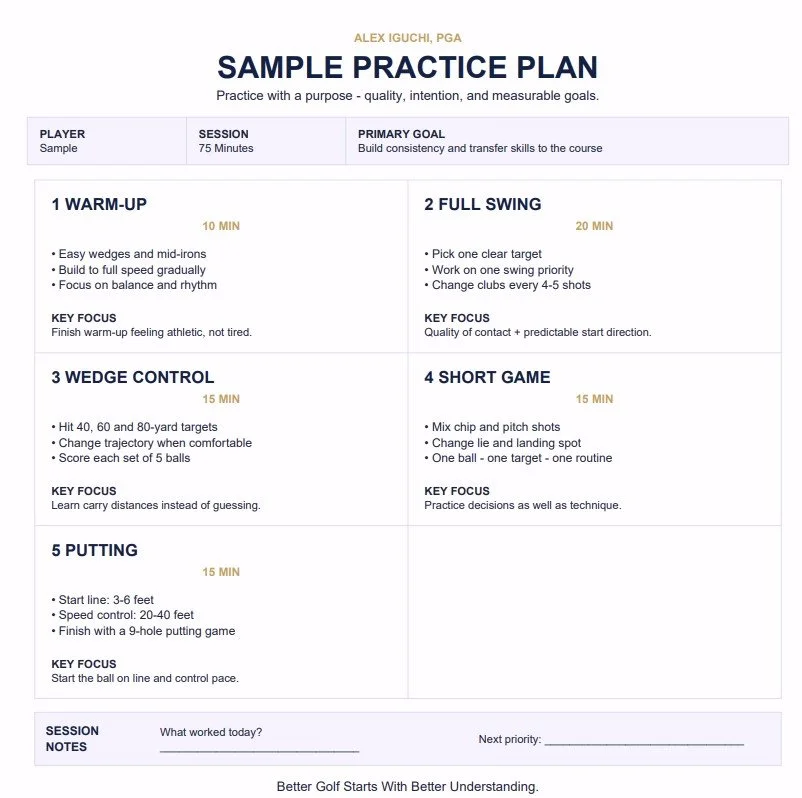
Receive a Practice Plan
The assessment is only the beginning.
Once we identify the movements that matter most, we translate the information into a practice plan.
That may include:
Movement rehearsals
External cues
Physical constraints
Training aids
Feedback drills
Ball-flight exercises
Launch-monitor practice
On-course transfer
Mental training
Over time, feedback should become simpler—not more complicated.
The ultimate goal is for you to rely less on the technology and more on your own awareness.
Better Golf Starts With Better Understanding
Technology doesn't replace coaching.
It gives the coach another way to see, measure and understand what's happening.
When we combine objective measurement with the golfer's history, goals, physical capabilities and ball flight, we can develop a clearer picture of what needs to change, and just as importantly, what doesn't.